Have you ever found a book that is just so beautiful you don't really care what it's about? Because that's how I felt the moment I saw the illustrations of Jane, the Fox and Me by Fanny Britt and Isabelle Arsenault, translated from French by Christelle Morelli and Susan Ouriou. It's great to see such a gorgeous graphic novel that not only appeals to girls, but addresses the issues that so many find they deal with during adolescence: self-esteem and physical appearance.
Helene has not had it easy at school. All of her former friends have abandoned her, and now entertain themselves by writing insults about Helene on the bathroom walls, or saying it out loud when they know she can hear. Their attacks on her appearance make Helene incredibly self-conscious, to the point she believes everything they say about her. It's a heartbreaking story seeing how a young girl can allow unkind and untrue words to alter her view of herself as well as the world around her. But Helene finds some relief in reading Jane Eyre, seeing how Jane grew up to be a beautiful intelligent woman, despite being a lonely orphan in her youth. As the bullying continues, it's not shocking to see how Helene retreats further into herself, and she begins to think that while Jane Eyre might have been lucky, it won't be true for herself.
This is a poignant story showing a different side of the person being bullied. We are introduced not to the typical victim who feels they are constantly being wronged, but one who actually believes what her tormentors say is true. Even if you cannot empathise with Helene, you may begin to realise that what you say to others really can affect how they view themselves. At least, I hope this is what young girls will take away from this story, and I think that providing it in a graphic novel format will potentially appeal to those girls who might not generally read. The illustrations provide the real sense of isolation that Helene experiences, with the sparing use of colour bringing the hope she initially lacks.
Walker Books have clearly put a lot of thought into the production of this book, getting the design spot on. Their close attention to matching the cover and the end papers to the colours of the illustrations really brings the whole book together in a spectacular presentation. (The copy I bought also had a fantastic fresh from the printer smell!) It's worth owning this title if not for the illustrations but for reminder of how much our words can mean to someone. This is a lesson that unfortunately seems to be reiterated to children and teens, but here, rather than being said it is shown through the emotion-provoking illustrations. If only there were more graphic novels as impressive and appealing to young girls as this one!
You can buy Jane, the Fox and Me directly from Walker Books on their website here.
Showing posts with label illustrated. Show all posts
Tuesday, 18 February 2014
Thursday, 13 February 2014
A House Without Mirrors by Mårten Sandén
I have already confessed once to enjoying a good translated book. I should also now confess that I am rapidly becoming obsessed with Pushkin Press's children's list. A House Without Mirrors is the second Pushkin Press book I've read, and it certainly won't be the last.
The story is told from the perspective of the 11-year-old Thomasine, who lives in a large house with her relatives and her dying great-aunt Henrietta. Her father spends the majority of his time caring for the elderly woman, while her aunt and uncle seem to be more interested in how to split the inheritance once Henrietta does die. Thomasine's cousins have their faults as well: vanity, shyness and trouble-making.
With a slight nod to Narnia, the children discover a wardrobe where all the mirrors in the house were hidden. Yet when they step inside, rather than being taken to another world, they are transported to another time in a mirror image of the same house.
The story is supplemented with beautiful illustrations by Moa Schulman. The style of the book itself may appear to be aimed at younger children, and while they can certainly enjoy the story, an older child and certainly an adult can appreciate the difficulty of love and grief that Thomasine and her family experience.
Translated from Swedish by Karin Altenberg and published by Pushkin Press, Mårten Sandén's A House Without Mirrors is not one to be missed. It is a fascinating look at how we all have an inner struggle, and what could happen if we only face it.
The story is told from the perspective of the 11-year-old Thomasine, who lives in a large house with her relatives and her dying great-aunt Henrietta. Her father spends the majority of his time caring for the elderly woman, while her aunt and uncle seem to be more interested in how to split the inheritance once Henrietta does die. Thomasine's cousins have their faults as well: vanity, shyness and trouble-making.
With a slight nod to Narnia, the children discover a wardrobe where all the mirrors in the house were hidden. Yet when they step inside, rather than being taken to another world, they are transported to another time in a mirror image of the same house.
The story is supplemented with beautiful illustrations by Moa Schulman. The style of the book itself may appear to be aimed at younger children, and while they can certainly enjoy the story, an older child and certainly an adult can appreciate the difficulty of love and grief that Thomasine and her family experience.
Translated from Swedish by Karin Altenberg and published by Pushkin Press, Mårten Sandén's A House Without Mirrors is not one to be missed. It is a fascinating look at how we all have an inner struggle, and what could happen if we only face it.
Friday, 7 February 2014
Tinder by Sally Gardner
Perhaps I'm lucky that I didn't read many fairy tales as a child. Aside from seeing the Disney versions, I never bothered with them. With two older sisters and TV shows that always referred to classic literature, I was too fixated on reading above my level by the age of 10, and completely missed out on tween and YA books. A degree in English literature got all of those classics out of my system (well, maybe not all of them), and now I've been able to rediscover the joys of fairy tales.
The funny thing about most fairy tales, though, is that they can be dark, morbid and even disturbing. Most of us are aware that the original classic fairy tales have been subjected to modern reworks that make them what Disney would classify as child-friendly. Sometimes they are scary, but it's rare to encounter one now that doesn't have a happy ending.
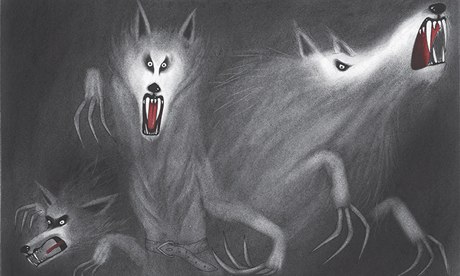
Then comes Tinder, Sally Gardner's fairy tale based on Hans Christian Andersen's The Tinderbox. It has everything an older reader, YA or adult, could possibly want to cleanse happily-ever-after from the system: chivalry, magic, werewolves, violence, seduction and deception. The story begins shortly after our protagonist Otto escapes the horrors of war, and while recovering he meets the beautiful red-haired Safire. Once she disappears, he knows he will do anything to find and marry her. But his quest takes him to dark and mysterious places, to the land of the werewolves, where he is suddenly entangled in the magic and curses that surround Safire's family.
This book is a great read, made particularly wonderful with illustrations by David Roberts. The gorgeous design and sparing use of colour (only black, white and red), make this haunting story worth owning - even if only to look at the pictures. The design is what drew me in, and I picked it up not knowing what to expect. The story itself did surprise me: this is very much not a children's fairy tale, especially with being quite frank about Otto wanting to sleep with Safire. At the end of the book Gardner points out that she wishes there were more illustrated books published for an older audience. I certainly share the sentiment, and I hope to see more books of this nature and quality in the future.
Labels:
David Roberts,
fairy tale,
Hans Christian Andersen,
illustrated,
Indigo,
magic,
Orion,
Sally Gardner,
Tinder,
Tinderbox,
werewolves,
YA
Monday, 3 February 2014
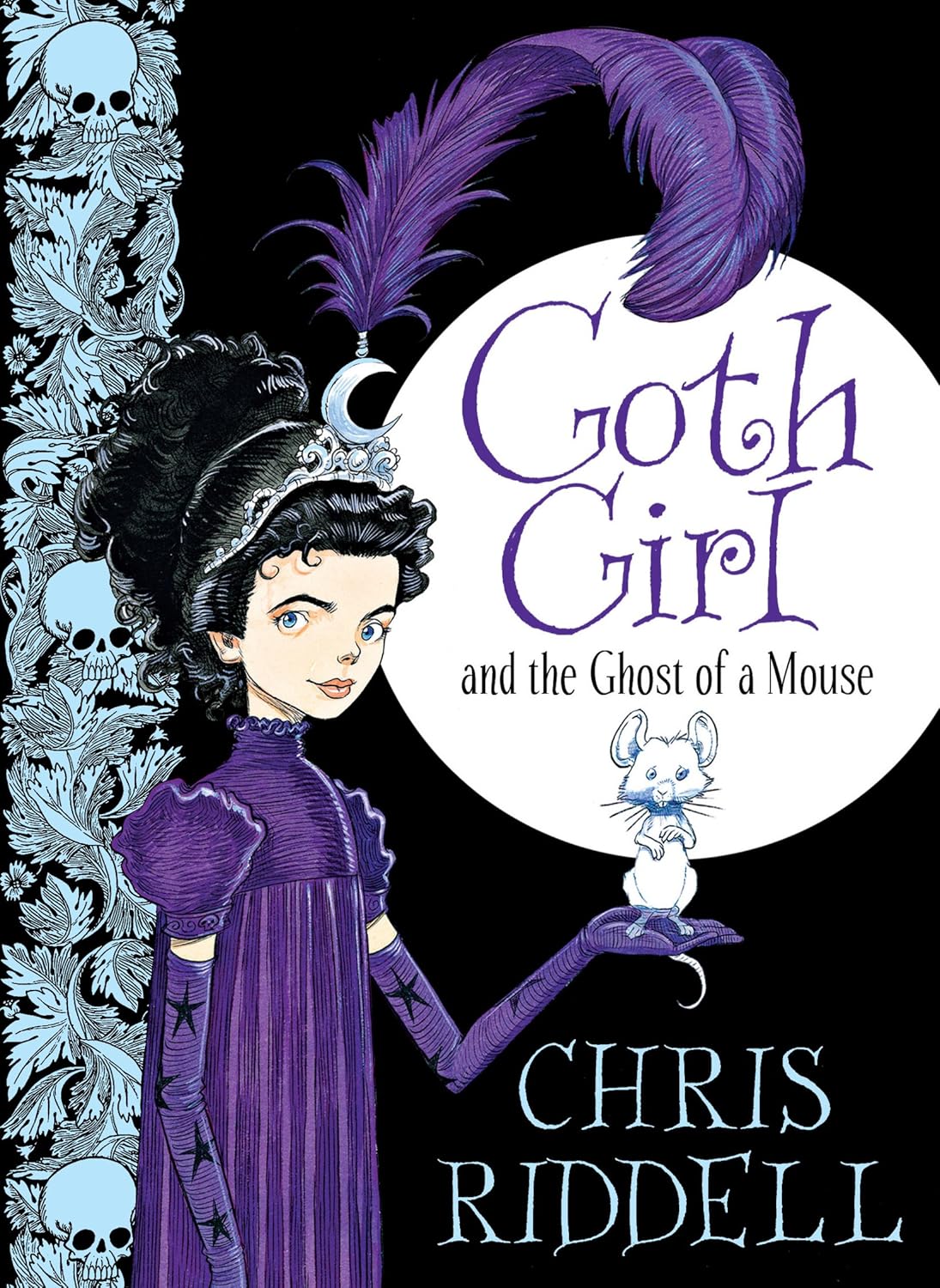
Goth Girl and the Ghost of a Mouse by Chris Riddell
After looking at Chris Riddell as an illustrator recently, I
thought it would be fun to look at him as an author as well, especially as he
has now been named the writer in residence at Book Trust. I have to say, I’m
thrilled with Book Trust’s choice and recognition of Chris Riddell’s immense
talent as both an author and illustrator. And he quite rightly won the Costa Children’s
Book prize of 2013 for his brilliantly clever Goth Girl and the Ghost of a
Mouse.
Goth Girl is clearly written for adults to enjoy as they
read to their children. It is a gothic novel written for children, but the text
has many puns, references to literary works, characters as well as parodies to
keep adults amused as well.
The story itself is about Ada Goth, the daughter of famous
poet Lord Goth, who seems to want little to do with his daughter since her
mother died. They live in Ghastly-Gorm Hall where Ada has no friends and very
little social interaction with anyone, until the day when the ghost of a mouse
appears in her bedroom. As Ada tries to determine why the mouse was killed in a
trap, she begins to encounter the other children who are working within her
house, and together they discover a disturbing plan for Lord Goth’s annual
indoor hunt.
The plot itself is rather simple, but the book’s charm comes
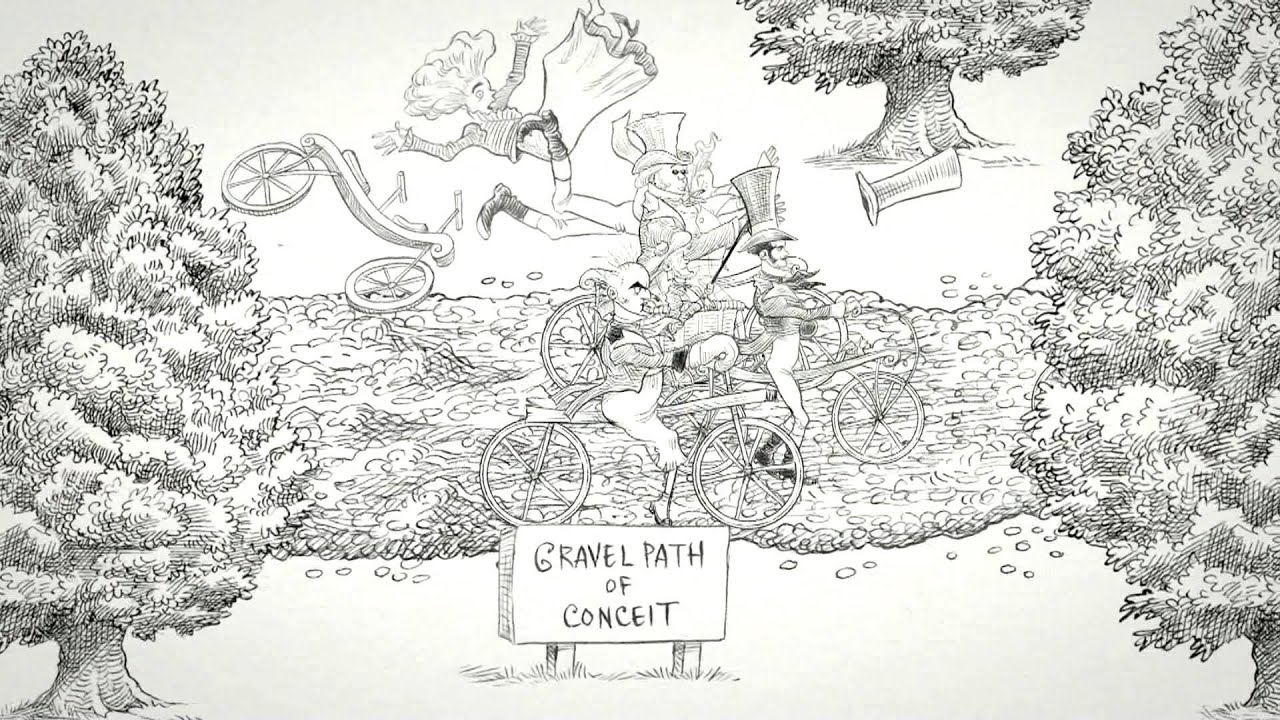
from the wittiness of the text and drawings. Like all of his work as an
illustrator, Chris Riddell allows his illustrations to provide another element
to the story, rather than treating them as supplementary. It is more obvious in
this book where he has been both author and illustrator, where he is fully in
control of the world he has created. It’s beautiful, clever and is certain to
make you at least grin at all the clever references and plays on words.
Tuesday, 28 January 2014
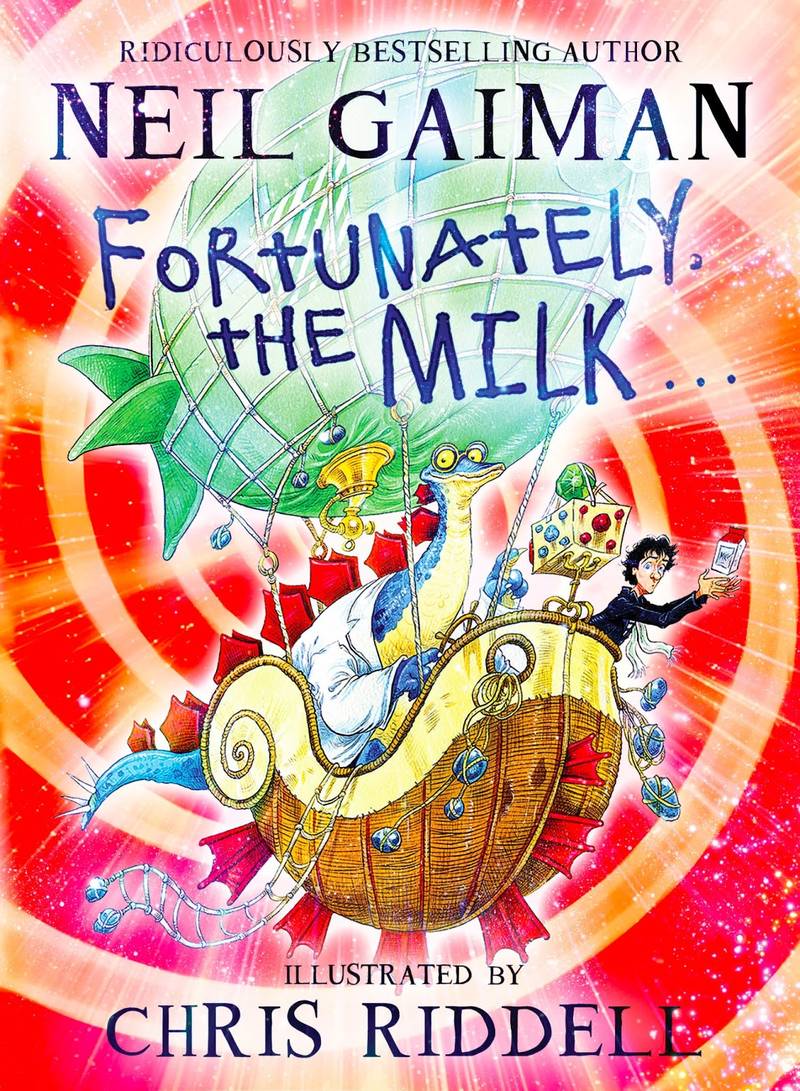
Fortunately, the Milk... by Neil Gaiman
Kurt Vonnegut (author of Slaughterhouse Five) once set a
list of eight rules for creative writing. I won’t bother with them all here
(you can easily find them in a Google search if you’re so intrigued), but there
was always one that stood out to me. And this is the one rule that Neil Gaiman
has taken to a new level in Fortunately, the Milk...:
Kurt Vonnegut’s rule of writing #3 – Every character should want something, even if it is only a glass of water.
In the case of this story, it’s two children who want milk
for their cereal, and their dad is sent out to get some. But the shop is only
just down the road, and he is gone for seemingly forever. What has held him up?
On his return his answer includes no less than aliens, dinosaurs, vampires,
pirates and a volcano god. Not to forget the ponies as well. Every good story
needs some ponies.
Of course it’s a seemingly simple task that then becomes
pure fantastic silliness. The children don’t seem to be buying their father’s
story, and why would they? A time-travelling stegosaurus could not possibly be
real…
But Chris Riddell’s illustrations are what make the silly
story become amazing and real. There are illustrations on practically every
page, giving life to the seeming absurdities, cleverly adding even more
elements to the tale. This is the sort of story that doesn't just deserve to be
illustrated, but needs to be when you have someone as talented and creative as
Riddell to do the job.
The book itself is a very quick read. It can be done in one
sitting. In fact, I’d recommend it to be. Just leave it for a day when you have
the time to properly enjoy it.
Fortunately, the Milk... is published by Bloomsbury Books and available from most book retailers.
Labels:
absurd,
aliens,
Bloomsbury,
Chris Riddell,
dinosaurs,
Fortunately the Milk,
funny,
hardback,
illustrated,
middle grade,
Neil Gaiman,
pirates,
ponies,
tribes,
vampires
Sunday, 5 January 2014
A Monster Calls by Patrick Ness
I was introduced to Patrick Ness's work through World Book Night, when a friend gave me The Knife of Never Letting Go (part 1 in the Chaos Walking trilogy). I loved it, and the whole trilogy, which led me on to read more of Ness. The title I was most looking forward to was A Monster Calls, and for good reason.
There are a few editions you can find of this title. I ended up getting the illustrated edition, because if there is an illustrated edition of anything, that tends to be what I go for. Illustrated by the incredibly talented Jim Kay (who has just been commissioned to illustrate the Harry Potter series), this is a title where you absolutely must get the illustrated edition to fully appreciate the beauty of the story.
As clearly detailed in the forward of the book, Ness was given an original idea by the late Sibohan Dowd, who unfortunately died before she was able to write the story. Simply put, the story is about a teenage boy, Conor, struggling with everyday life while his mother battles terminal cancer. He awakens one night from a recurring nightmare, only to find a monster outside his bedroom window. The monster continues to visit Conor, pushing the boy to come to terms with his mother's situation.
The book itself is short, but Ness is masterful with his writing, putting so much into each scene, each character, you feel he accomplishes so much in 200 pages. It's funny, tender and heartbreaking, with Kay's ink illustrations setting a perfect mood for the text. There is far more I could say about this amazing book, but I don't want to spoil it for anyone. Just do yourself a favour and make sure you get the illustrated edition.
You can purchase the illustrated paperback from publisher Walker Books here: A Monster Calls by Patrick Ness
There are a few editions you can find of this title. I ended up getting the illustrated edition, because if there is an illustrated edition of anything, that tends to be what I go for. Illustrated by the incredibly talented Jim Kay (who has just been commissioned to illustrate the Harry Potter series), this is a title where you absolutely must get the illustrated edition to fully appreciate the beauty of the story.
As clearly detailed in the forward of the book, Ness was given an original idea by the late Sibohan Dowd, who unfortunately died before she was able to write the story. Simply put, the story is about a teenage boy, Conor, struggling with everyday life while his mother battles terminal cancer. He awakens one night from a recurring nightmare, only to find a monster outside his bedroom window. The monster continues to visit Conor, pushing the boy to come to terms with his mother's situation.
The book itself is short, but Ness is masterful with his writing, putting so much into each scene, each character, you feel he accomplishes so much in 200 pages. It's funny, tender and heartbreaking, with Kay's ink illustrations setting a perfect mood for the text. There is far more I could say about this amazing book, but I don't want to spoil it for anyone. Just do yourself a favour and make sure you get the illustrated edition.
You can purchase the illustrated paperback from publisher Walker Books here: A Monster Calls by Patrick Ness
Labels:
A Monster Calls,
death,
family,
grief,
illustrated,
Jim Kay,
Patrick Ness,
Walker Books,
YA
Subscribe to:
Comments (Atom)