Pages

Showing posts with label middle grade. Show all posts

Sunday, 23 March 2014

The Dark Wild by Piers Torday

When my NetGalley request for this title was approved, I squealed with excitement. The Dark Wild follows the highly-acclaimed The Last Wild, which I've already expressed my love for in this post, and I've been looking forward to reading more ever since. For your own sake, if you haven't read The Last Wild and you want to, perhaps you should be doing that rather than reading this. 

The Dark Wild picks up right where we left Kester, but now he finds himself facing problems bigger than he could imagine. Polly has disappeared after confessing she holds a secret that could bring down Facto, leaving Kester desperate to find her. In his search for Polly he soon discovers another Wild, and another Wildness - a Dark Wildness who wants nothing but to destroy all humans. And Kester, with his ability to talk to all animals, lands right in the middle of everything. 

For those of you who have read The Last Wild, this sequel will certainly not disappoint. Torday hasn't lost the pace, charm or humour, and The Dark Wild will keep you gripped to the point that you'll possibly miss your lunch (I did...). The animals are fantastic, with distinct voices and characters that you can understand why Kester is so attached and protective of them. You may never look at a cockroach or a rat the same way ever again. 

The Dark Wild is a spectacular adventure, bringing far more elements to the story and leaving you hungry for the final installment. Published by Quercus, The Dark Wild is available from 27th March. You can read extracts from both books on the website: The Last Wild

Wednesday, 19 March 2014

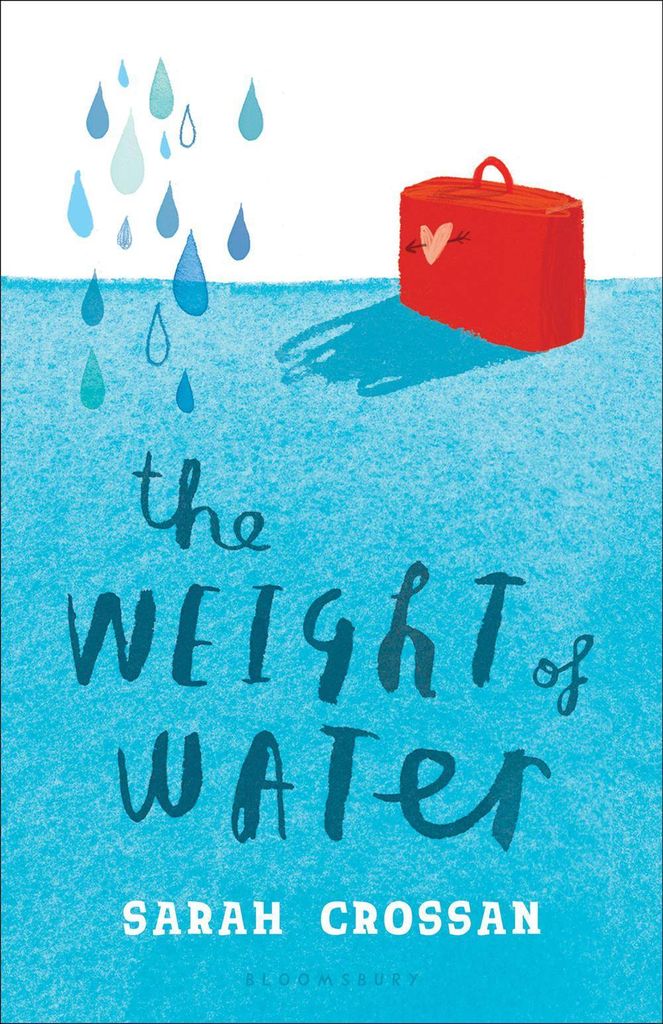
The Weight of Water by Sarah Crossan


I will admit that I have never read an entire book written in verse before. Not necessarily by choice, but I simply never found myself with that sort of book in my hands. I also haven’t read a lot of poetry outside of university. All that considered, one might even wonder how I managed to find myself reading The Weight of Water by Sarah Crossan, which is written entirely in poems.

First, let me get this out of my system: despite my lack of regularly reading it, I have a real respect for poetry. It requires a certain mastery of language, an understanding that there is no need to be verbose to illustrate a scene. One of the best books I ever read was written by someone known as a poet, not a novelist, but it was his use of language that made the novel really stand out. (But this review isn't about that title - so it shall remain nameless.)

I was in love with The Weight of Water within a few pages. Along with the gorgeous simplicity of a verse, it was the concept of taking moment within someone's life and capturing it in a few stanzas. Each poem shows a meaningful part of Kasienka's story as she is uprooted from her home in Poland and settles in Coventry with her mother as they search for her father. But the text flows so well from one poem to another that it doesn't seem any different from reading a prose book. In fact, it's one of the most enjoyable reads I've had recently. 

As a Pole recently moved to England, Kasienka faces many problems: being the new girl in school, being a foreigner, having a father who has run away from his family - and a mother unwilling to give up her search for him. Each poem is told from her perspective as she struggles with her new life, but she soon finds a break from her troubles through swimming. 

Despite the simplicity of the text, The Weight of Water provides complex characters and plot, with a young girl trying to figure out who she is under incredibly difficult circumstances. It is an impressive work, so beautifully different from many other books for middle grade readers. I highly recommend getting a copy, having a read and just enjoying its impressive structure.

Wednesday, 19 February 2014

The Last Wild by Piers Torday

I have to admit that when I picked up a copy of The Last Wild I didn't know anything about it. I do not know how I had missed it for so long, and I'm rather ashamed I did. The reason I did pick it up was for two simple lines on the back of the book: 
1. There is a flock of excited pigeons in his bedroom. 
2. They are talking to him.
I wondered what pigeons would say if they could talk, so I bought the book with no other expectations.

Kester is a boy living inside a quarantine zone. The world outside has become dangerous due to the Red Eye virus that has run rampant and killed out all the wildlife - except the animals known as vermin (pigeons, rats, cockroaches). Contact with any animal is avoided, in case they are carrying the deadly Red Eye. But soon Kester, who hasn't been able to speak for years, discovers he can communicate with the pigeons and even the cockroach who help him make a dramatic escape back into the quarantine zone. And it's here that Kester learns the truth: not all of the animals have died. There are only a few left, and their numbers are dwindling as they are ravaged by the disease. But they now have a human who they can talk to, who they can convince to help them find a cure for the Red Eye, so that the last remaining wild can be saved.


Rather amusingly, I had been trying to avoid dystopian books for a while. After The Hunger Games, it seemed like there were too many showing up on the market with very little to offer. So I'm incredibly pleased I wasn't aware this was a dystopian book, otherwise I would not have picked it up, and I would have missed out on a brilliant story.


This is a great book for readers who are interested in dystopian fiction, but perhaps not old enough to get into the more popular YA titles of this genre or want to avoid the ones that are particularly dark. That's not to say those who enjoy the YA titles won't enjoy The Last Wild - in fact, they may find it a refreshing take on dystopias. With adventure and hints at fantasy, this book is a great read with a strong message about the importance of wildlife and nature. Kester is a fascinating lead character who will appeal to both boys and girls. The animals who accompany him are equally fantastic and quite comical at times.


The Last Wild has just been listed on the Waterstones Children's Book of the Year shortlist, and its sequel, The Dark Wild, is due out at the beginning of April. So it's time to start reading it if you haven't already. You can buy The Last Wild from Quercus books here.

Monday, 17 February 2014

Darcy Burdock: Hi So Much by Laura Dockrill

If you've not been introduced to the world of Darcy Burdock, now is the time to change that. With the second book in the series, Hi So Much., due to be published on February 27th, Darcy Burdock is rapidly becoming the "it" girl in tween fiction. She's funny, she's creative, and she's what some might call overly-dramatic (but isn't that all tween girls?). I can see so much of my ten-year-old self in her, and I'm sure everyone will be able to relate to Darcy in one way or another.

I first saw Laura Dockrill during a talk at the British Library about children's literature, and it was her enthusiasm about books, especially those she read during her childhood, that really made her stand out. (Okay, her neon pink tights may have helped with that as well.) She was such a fascinating speaker that it only made sense to check out her work, which is how I was introduced to Darcy Burdock.

The books are written from Darcy's point of view, in Darcy's manner of speaking and way of thinking. It can take some getting used to, but it's worth it as Dockrill has perfectly captured youth in this character. Darcy is made more interesting by her ability to write creative stories that relate to her life and even provides illustrations. It's a difficult feat for an author to have a character who writes, and also include the character's stories within a book, but with Darcy it only seems natural and necessary.

In the second installment, Hi So Much sees Darcy enter the Big School, where everything is different. It encompasses the difficulties of the tween age: whether or not you can be best friends with a member of the opposite sex, how to cope with life when tragedy strikes, and how there are always people you can depend on, even when you don't expect it. But most importantly, even with all the ups and down dramas of Darcy's life, her reaction is realistic of a ten-year-old. You can only sympathise with all her pains and take pleasure in her joys. The book is, quite simply, a really fun read.

What I truly loved about this book was how many people in Darcy's life would suggest she write, be it to cope with something or simply because they recognise a talent. There was no one ever pushing her too much or telling her not to, which is a wonderful reminder of how much a child can thrive if their interests are supported and they aren't regularly running into negativity. I feel any child reading about Darcy will not only appreciate everything she experiences, but also be inspired to be creative in some way. At least, this is what I can only hope, because I know that if I had read this as a ten-year-old girl, I would have wanted to be best friends with Darcy, and also wanted to write stories of my own.

Darcy Burdock: Hi So Much. publishes on the 27th of February. Buy now direct from Random House here.

Thursday, 13 February 2014

A House Without Mirrors by Mårten Sandén

I have already confessed once to enjoying a good translated book. I should also now confess that I am rapidly becoming obsessed with Pushkin Press's children's list. A House Without Mirrors is the second Pushkin Press book I've read, and it certainly won't be the last.

The story is told from the perspective of the 11-year-old Thomasine, who lives in a large house with her relatives and her dying great-aunt Henrietta. Her father spends the majority of his time caring for the elderly woman, while her aunt and uncle seem to be more interested in how to split the inheritance once Henrietta does die. Thomasine's cousins have their faults as well: vanity, shyness and trouble-making.

With a slight nod to Narnia, the children discover a wardrobe where all the mirrors in the house were hidden. Yet when they step inside, rather than being taken to another world, they are transported to another time in a mirror image of the same house.

The story is supplemented with beautiful illustrations by Moa Schulman. The style of the book itself may appear to be aimed at younger children, and while they can certainly enjoy the story, an older child and certainly an adult can appreciate the difficulty of love and grief that Thomasine and her family experience.

Translated from Swedish by Karin Altenberg and published by Pushkin Press, Mårten Sandén's A House Without Mirrors is not one to be missed. It is a fascinating look at how we all have an inner struggle, and what could happen if we only face it.


Monday, 3 February 2014

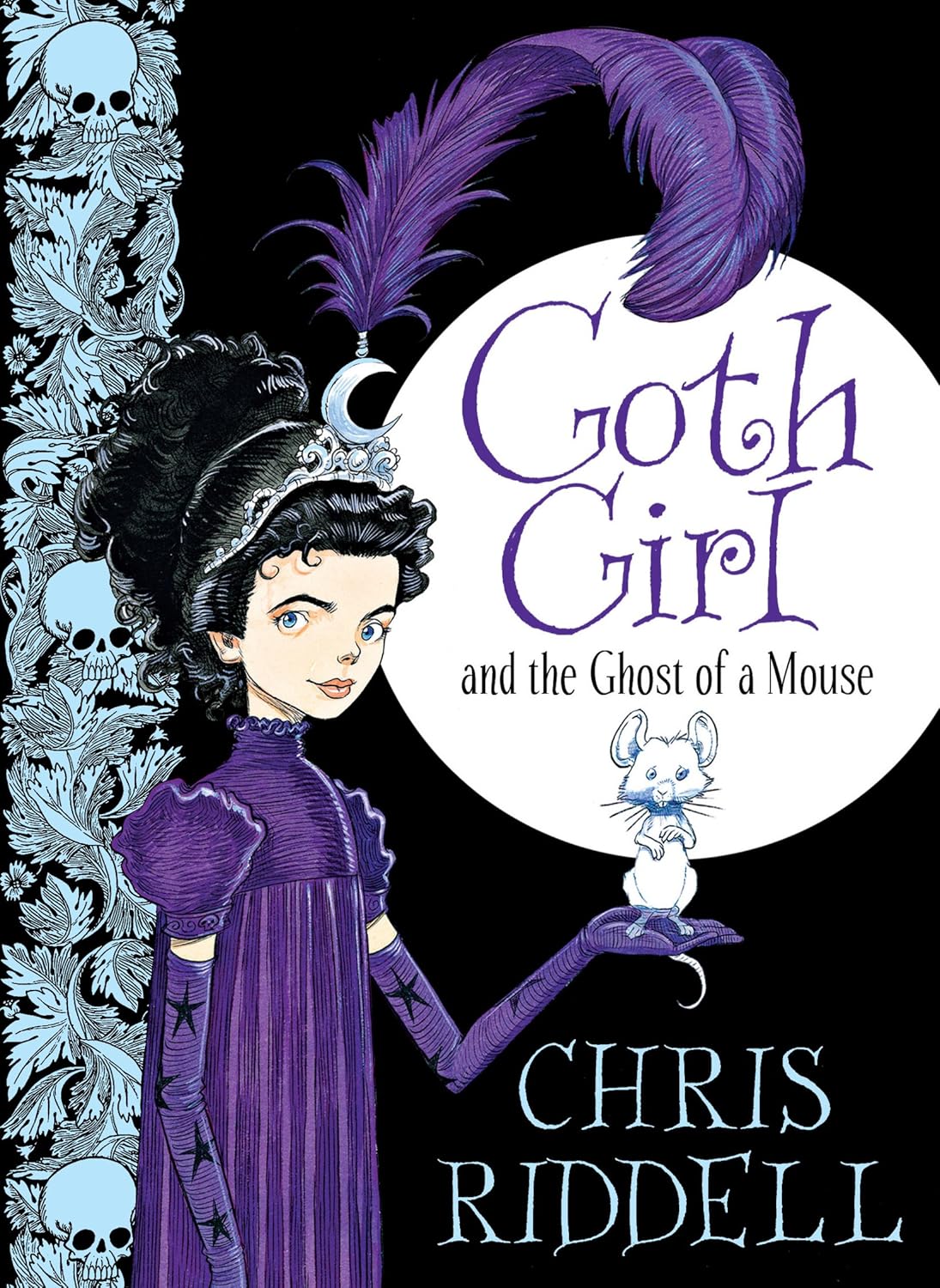
Goth Girl and the Ghost of a Mouse by Chris Riddell

After looking at Chris Riddell as an illustrator recently, I thought it would be fun to look at him as an author as well, especially as he has now been named the writer in residence at Book Trust. I have to say, I’m thrilled with Book Trust’s choice and recognition of Chris Riddell’s immense talent as both an author and illustrator. And he quite rightly won the Costa Children’s Book prize of 2013 for his brilliantly clever Goth Girl and the Ghost of a Mouse.

Goth Girl is clearly written for adults to enjoy as they read to their children. It is a gothic novel written for children, but the text has many puns, references to literary works, characters as well as parodies to keep adults amused as well.

The story itself is about Ada Goth, the daughter of famous poet Lord Goth, who seems to want little to do with his daughter since her mother died. They live in Ghastly-Gorm Hall where Ada has no friends and very little social interaction with anyone, until the day when the ghost of a mouse appears in her bedroom. As Ada tries to determine why the mouse was killed in a trap, she begins to encounter the other children who are working within her house, and together they discover a disturbing plan for Lord Goth’s annual indoor hunt.  

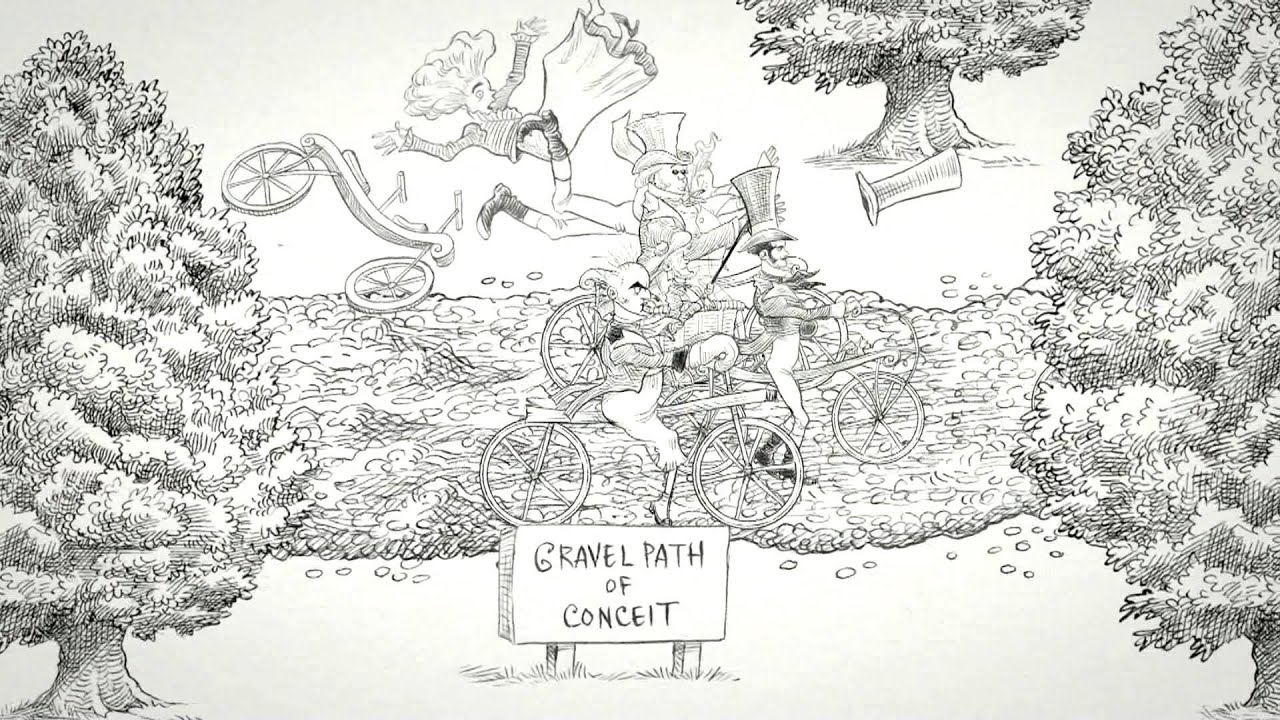
The plot itself is rather simple, but the book’s charm comes from the wittiness of the text and drawings. Like all of his work as an illustrator, Chris Riddell allows his illustrations to provide another element to the story, rather than treating them as supplementary. It is more obvious in this book where he has been both author and illustrator, where he is fully in control of the world he has created. It’s beautiful, clever and is certain to make you at least grin at all the clever references and plays on words.


Pan Macmillan have put a lot of love into producing this title, not holding back on the production value. The purple sprayed edges, hardback binding and ribbon marker are enticing and just a preview of the quality of the illustrations inside. It’s wonderful to see a book that is high quality in both production and content be recognised by Costa, and it’s even better to see Book Trust bringing an author/illustrator in as their writer in residence. There will be another Goth Girl title, and I look forward to seeing what Chris Riddell brings us next.   

Tuesday, 28 January 2014

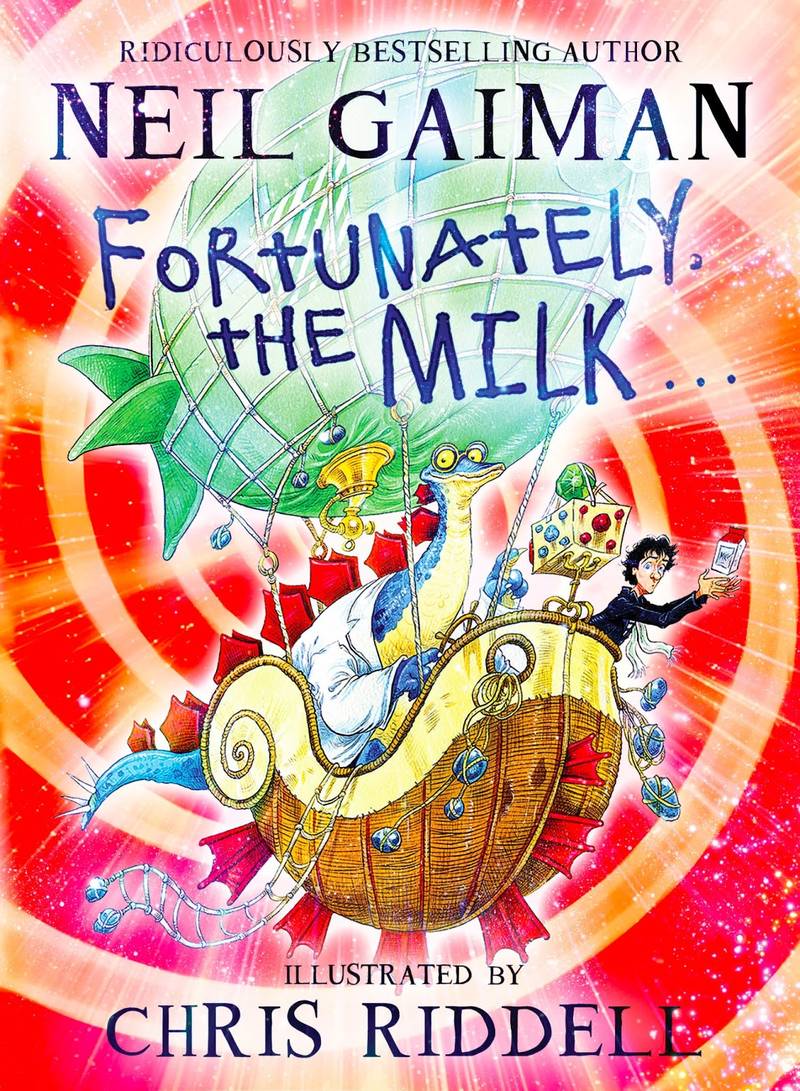
Fortunately, the Milk... by Neil Gaiman

Kurt Vonnegut (author of Slaughterhouse Five) once set a list of eight rules for creative writing. I won’t bother with them all here (you can easily find them in a Google search if you’re so intrigued), but there was always one that stood out to me. And this is the one rule that Neil Gaiman has taken to a new level in Fortunately, the Milk...:
Kurt Vonnegut’s rule of writing #3 – Every character should want something, even if it is only a glass of water.
In the case of this story, it’s two children who want milk for their cereal, and their dad is sent out to get some. But the shop is only just down the road, and he is gone for seemingly forever. What has held him up? On his return his answer includes no less than aliens, dinosaurs, vampires, pirates and a volcano god. Not to forget the ponies as well. Every good story needs some ponies.

Of course it’s a seemingly simple task that then becomes pure fantastic silliness. The children don’t seem to be buying their father’s story, and why would they? A time-travelling stegosaurus could not possibly be real…

But Chris Riddell’s illustrations are what make the silly story become amazing and real. There are illustrations on practically every page, giving life to the seeming absurdities, cleverly adding even more elements to the tale. This is the sort of story that doesn't just deserve to be illustrated, but needs to be when you have someone as talented and creative as Riddell to do the job.


The book itself is a very quick read. It can be done in one sitting. In fact, I’d recommend it to be. Just leave it for a day when you have the time to properly enjoy it. 

Fortunately, the Milk... is published by Bloomsbury Books and available from most book retailers. 

Sunday, 19 January 2014

Wonder by RJ Palacio

Many times when I see a book heavily publicised I become critical. It's not that I suddenly assume a book will be bad, because I want it to be good. I want all books to be good. I've just had a few bad experiences that have made me skeptical (namely Twilight; I didn't even bother with Fifty Shades). But I couldn't help being intrigued by the cover of Wonder. For what it's worth: I always judge a book by its cover. I work in publishing, and I know how important a cover is to the success of a book. If it's not done properly on the outside, I can only fear how good it can be on the inside. So, I picked up Wonder on a whim. It was heavily publicised in my local Waterstones, but I really liked the cover design and thought it worth a read.

Our protagonist, August (Auggie), has severe facial deformity, and at the age of 10 is about to go to school for the very first time. He is anything but oblivious to his condition - the way people look at him on the street, the way people treat him differently - he knows why, but is still able to sometimes see the funny side of his situation.

Once Auggie starts school, the inevitable happens: bullying. Not just your standard name-calling bullying, but more complex forms that are not outright classified as bullying, but still result in emotional damage.There are the kids who pretend to be helpful just to make themselves look better, and those who are friendly, but give into the peer pressure of making fun of Auggie when he's not around.

The beauty of this book, though, is not just how Auggie is affected by his condition and situation, but how everyone in his life is affected and how they see him. Along with Auggie's point of view, we hear from his sister, his friends, his sister's boyfriend, his sister's friend. Put together they show the complexity that surrounds someone who has a difficult life merely because he looks different to everyone else.

Not making a pun on the title, this book has a real It's a Wonderful Life feel to it, when coming to the end you realise how one person's life can touch so many others. It is also the ideal book dealing with the problem of bullying. There are many people who believe that because Auggie is different that it is okay to make fun of him, or okay to assume he has been given special treatment. But there are so many others who choose to be kind, choose to try to understand what he is going through. And in the end, even some of the bullies have a change to change their ways.

My sister is a children's librarian who believes this book should be taught in every school. I would agree, but I also wouldn't hold back from recommending it to people of any age. I told my mother to read it, who in turn told my grandmother to read it. Wonder is a touching story, funny, well-written and above all with an important message. That is, while it is perfectly okay to judge a book by its cover (because there is control over what a book looks like):


It's a lesson that sadly keeps needing to be taught, but RJ Palacio has done a magnificent job in showing how important it is to be kind.

Wonder is published by Bodley Head Childrens Books, part of Penguin Random House. You can buy the book here.

Wednesday, 15 January 2014

The Letter for the King by Tonke Dragt

When I did my degree in Literature, most books I read were written by what we came to call the DWM. That is, Dead White Men. My classes were 90% American and English literature, and the books probably 90% DWM authors. At the time, I didn't question it. We were reading what was considered to be classics, and I enjoyed most of the books.

But a few years ago a friend confessed that his girlfriend was annoyed with him for constantly reading DWM. Why wasn't he bothering with female authors? So he spent an entire year trying to read nothing but female authors. I can't say I ever went as far as that, but I did become more aware of not just what, but who I was reading. I am certain there are many people who might agree more women writers need to be taught at schools. On the plus side, I think they are very well represented in modern publishing. Glancing at my bookshelves now, I'd say I've a pretty good male-female balance.

My real concern with reading, though, is that very few people read books in translation. Possibly worse, UK and US publishers seem more keen to export their own authors rather than finding great works of world literature. So many people will say that reading offers an expanded view of the world, but I find it hard to agree with that when most of us only read from a select geographical region.

That's not to say great works of foreign literature don't make it into English. There has recently been a surge of interest around Scandinavian stories thanks to Steig Larsson. Many classics come from outside the English-speaking world as well. But I still feel most English-speaking publishers are interested in selling, rather than buying, foreign rights.

And this is when I discovered Pushkin Press, who only publish books in translation. There was a book in Waterstones that kept catching my eye. The cover was gorgeous, and it was so much fatter than all the other books on the children's shelves surrounding it. A story about a knight on a quest isn't usually the first thing I go for, but I found I couldn't resist any longer.

The Letter for the King was originally written in Dutch by Tonke Dragt in 1962. She's considered to be one of the greatest Dutch writers for children, yet I would guess most of us outside the Dutch-speaking world wouldn't have heard of her. A shame, really.

The Letter for the King is fantastic. It is written in an older, more simple language than is used in most books today, but has so much charm. Tiuri, our would-be knight had he not been charged with an urgent task of delivering a letter, is a wonderful protagonist for children. His thoughts are simple, easy to understand, yet he is intelligent, brave and incredibly loyal to his task. Throughout his quest to deliver a letter to a king of a neighbouring kingdom, he encounters many people who offer to help him, and many times his trust in others becomes a misfortune in his tale. There are enemies lurking, willing to kill the young man in order to steal the letter.


Despite its hefty length for a children's book (460 pages), The Letter for the King is an exhilarating read with some lovely illustrations by the author. Each step of Tiuri's journey brings another adventure, another danger, and another friend who shows that often there is more good than evil in the world.

I commend Pushkin Press for finding books to translate and publish in English, and I can't wait to see more of what Pushkin bring into the English market. They've done a fantastic job with The Letter for the King, and I would highly recommend this title to anyone wanting a bit of old-fashioned chivalry and adventure.